


A manufacturing catalogue has one job: help buyers find the exact part they need, fast. If your catalogue is hard to navigate, inconsistent, or full of gaps, buyers give up and call your sales team instead — or worse, they go somewhere else. We design manufacturing catalogues for companies with large, technical product ranges across the UK, from our Hampshire studio. Whether it’s 50 pages or 650, we build catalogues that work as hard as your sales team. Call 07 443 141 606 and speak to the designer who’ll do the work.
Manufacturing Catalogue Design
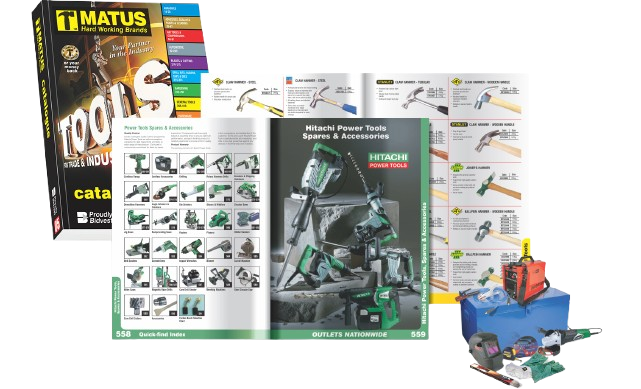
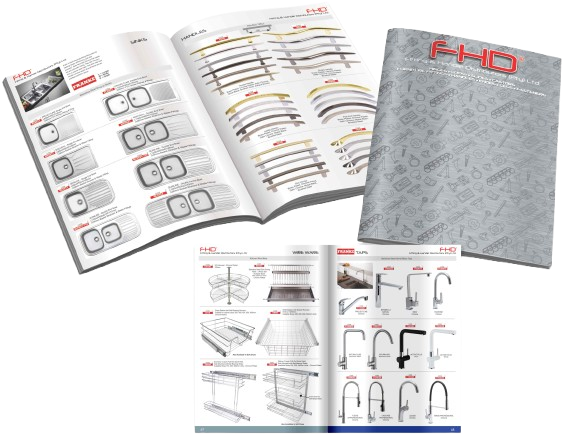

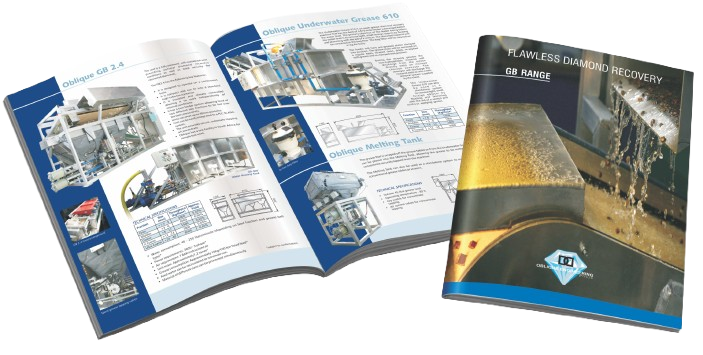
Built for large, technical product ranges
Manufacturing catalogues are complex by nature. Thousands of parts, dozens of product families, detailed specifications, part numbers, dimensions, ratings, materials — it adds up fast. The trouble starts when all that information gets forced into a layout that wasn’t planned to handle it. Pages get cramped, navigation breaks down, and buyers can’t find what they’re looking for without flipping back and forth.
We plan the structure before we design a single page. How do your buyers actually search — by application, by product family, by material, by size? The answer shapes everything from the contents page to the tab system to how we group variants. One catalogue we produced ran to 676 pages. That kind of scale only works if the architecture is right from the start.
The point is simple: a catalogue organised around how buyers think sells more than one organised around how your warehouse is laid out.
Making spec tables and part numbers easy to read
Specification tables are where most catalogues fall apart visually. Too many columns crammed into too little space, inconsistent formatting, tiny type, part numbers that blur into each other — it makes buyers hesitate, and hesitation costs you orders.
We treat spec tables as the most important element on the page, because for most buyers they are. Clear column hierarchy, consistent alignment, sensible type sizes, and enough white space to let the data breathe. Part numbers get the prominence they deserve — they’re what gets written on the order, so they need to be unmissable.
Done properly, a well-structured spec table reduces wrong orders, cuts down on calls to your sales team, and gives buyers the confidence to commit without chasing clarification.
Keeping the data right across the whole range
Data consistency is where large catalogues carry the most risk. A dimension that’s wrong on page 340, a discontinued part number still listed, a rating that doesn’t match the datasheet — these errors erode trust and create expensive problems downstream. Returns, requotes, frustrated buyers, wasted rep time.
We treat your data with the same care we give the design. We flag suspicious gaps, inconsistencies, and anything that doesn’t look right before it goes to print. We’re not engineers — we won’t catch a wrong torque rating — but we will spot where a pattern breaks, where a cell is empty that shouldn’t be, or where a code doesn’t match the format used everywhere else.
Print and digital that match
If you’re producing both a printed catalogue and a digital version, they need to come from the same source. Two separate files maintained independently will drift apart — and when a buyer finds a discrepancy between your PDF and your printed book, they stop trusting both.
We design one master layout that outputs to print and digital PDF from the same artwork. Updates happen once, not twice. If you need an interactive digital version with hyperlinked contents or searchable product tables, we’ll discuss that at the start so it’s built in rather than bolted on afterwards.
What to have ready before you brief us
You don’t need everything perfect before you pick up the phone. But two things help enormously: clean product data in a structured format (spreadsheet, ERP export, even a well-organised folder), and a sense of how your buyers group and search for products. If you’re not sure on either, that’s fine — sorting those gaps is part of what we do in the first conversation.
Manufacturing catalogue questions
How big a catalogue can you handle?
As big as it needs to be. We’ve produced catalogues from 40 pages to 676 pages. Scale isn’t a problem — it just needs proper planning upfront.
Can you work from our existing product data?
Yes. Spreadsheets, ERP exports, existing PDFs, even printed pages we need to rebuild from. We’ll tell you what format works best, but we’ll work with what you’ve got.
Do you produce a digital version too?
Yes. Print and digital from the same master artwork, so they always match. Interactive PDFs with hyperlinked navigation if needed.
Do you handle the product photography?
Yes, where needed. We provide in-house product photography and colour balancing for accurate, consistent imagery across the range.
Can you keep it up to date for future editions?
Yes. We can handle periodic updates, new product additions, and full reprints. The artwork stays with us ready for the next edition.
Talk to our catalogue designers
If your catalogue isn’t working as hard as your products, let’s fix that. Call 07 443 141 606 for a no-obligation conversation, or email us at paul@harrison-consulting.co.uk. We’re based in Hampshire and work with manufacturers across the UK.